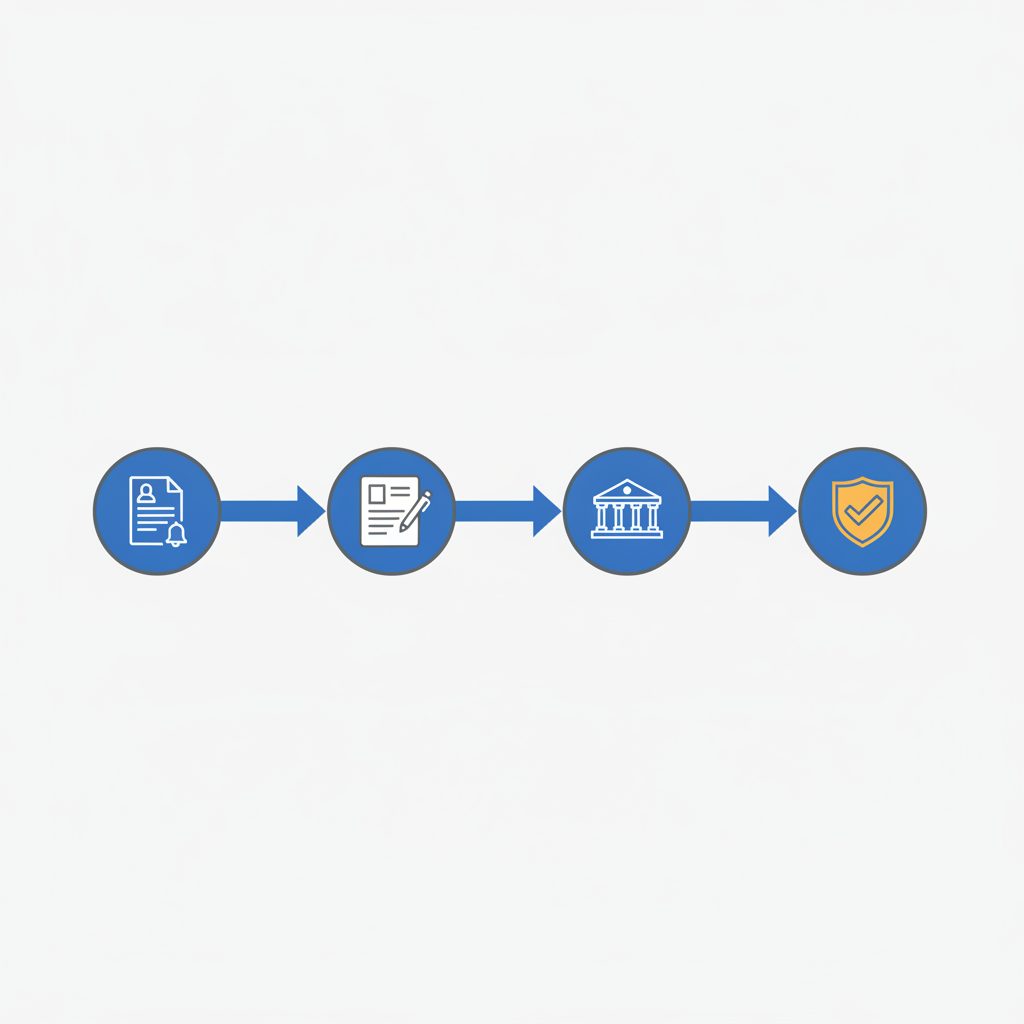














Ask any first-time aspirant which exam opens the most central government doors at once, and the honest answer is SSC CGL. The Combined Graduate Level examination, run by the Staff Selection Commission, is the main gateway to a wide band of Group B and Group C posts across ministries and departments. One application, one preparation track, dozens of possible postings. That breadth is exactly why it draws a staggering number of candidates for every seat.
This is an evergreen explainer of how the exam is built, what jobs sit at the end of it, and where each one can take a career. It does not list current vacancies or dates, because those belong in the official notification and nowhere else. What follows is the structure that stays broadly stable year to year.
What SSC CGL is and who runs it
The Staff Selection Commission is a central body that recruits for non-gazetted posts across the Government of India. CGL is its flagship graduate-level exam. It exists to fill roles that need a degree but sit below the elite Civil Services rung — the working backbone of central departments, from tax offices to statistical services to ministries.
If you are new to how any of this fits together, start with our map of how government recruitment works in India, then come back for the specifics.
The exam structure: tiers you clear in sequence
CGL is a multi-tier exam. You clear each stage to reach the next. The Commission has revised the format over the years, but the logic has settled into two computer-based tiers.
Tier 1: the screening
An objective, computer-based test covering four areas — General Intelligence and Reasoning, General Awareness, Quantitative Aptitude, and English Comprehension. It is a qualifying and shortlisting stage, with negative marking for wrong answers. Speed and accuracy both count, because the paper is tight on time.
Tier 2: the decider
A more demanding computer-based stage with multiple sections, heavier on quantitative ability and English, and including a module that tests reasoning and general awareness. Some posts also involve a computer proficiency or data entry skill test at this stage. Tier 2 marks carry the real weight in the final ranking.
Across the tiers, the syllabus rewards a candidate who has drilled arithmetic and reasoning until they are automatic, reads English closely, and keeps a steady general-awareness habit. The exact marks, timing, and negative-marking rules are printed in each cycle’s notification — read that carefully, using our guide on how to read a government job notification.
The posts: what you can actually become
This is where CGL gets interesting. A single exam feeds many different jobs, allotted by rank and preference. The well-known ones include:
- Income Tax Inspector and Inspector (Central Excise / GST) under the tax departments.
- Assistant Section Officer in central ministries and departments.
- Assistant Audit Officer and Assistant Accounts Officer under the audit and accounts services.
- Inspector posts under various enforcement and examination wings.
- Auditor, Accountant, and Tax Assistant roles at the Group C level.
Pay, prestige, and daily work vary sharply across this list. An inspector role in a tax department carries fieldwork and enforcement; a section officer post in a ministry is desk-based policy support; an audit officer role is technical and specialised. Your rank decides which of these you are offered, which is why the difference between a good score and a great one is the difference between two very different careers.
A useful habit before you even start preparing: look up what each of these posts actually does day to day. Aspirants often chase a designation for its reputation, then discover the work does not suit them. An enforcement-heavy inspector role and a quiet analytical audit post attract very different temperaments. Knowing your own preference early lets you order your post choices honestly when the time comes, rather than picking on prestige alone and regretting the fit later.
Selection: from exam to appointment
Clearing the tiers is not the end. The process runs through document verification, where originals are checked against your claims on age, qualification, and category. A final merit list is then compiled, posts are allotted by rank and stated preference, and appointment follows. Category-wise cut-offs apply throughout, in line with reservation rules.
Career path and growth
The appeal of CGL is not only the entry job — it is the ladder above it. Most of these posts sit inside structured government services with defined promotion channels. An inspector can rise through departmental grades over a career; a section officer can move up the ministry hierarchy; audit and accounts roles have their own progression into senior technical posts. Growth depends on departmental rules, departmental exams in some cases, and time served, but the ceiling is far higher than the starting designation suggests.
Stability is the quiet draw. These are pensionable, secure roles with predictable transfers and defined pay structure. For many candidates weighing options, that security is the deciding factor — a theme we explore in government versus private jobs in India.
How to prepare without burning out
CGL rewards long, consistent preparation over frantic bursts. A few principles hold across every successful attempt.
- Master the basics of quant and reasoning early — these are learnable and high-scoring, and small daily practice compounds.
- Read English every day rather than memorising rules in isolation.
- Build a light, regular general-awareness routine instead of cramming near the exam.
- Use previous papers and mocks as diagnostics to find weak areas, then fix them one at a time.
- Respect the clock — accuracy under time pressure is the real test.
Is SSC CGL right for you?
If you are a graduate who wants a secure central government post with genuine variety in where you might land, CGL is one of the strongest single bets available. It is not easy — the competition is enormous and the preparation is long. But the payoff is a stable career with room to climb. Read the official notification the moment it appears, plan a realistic study calendar, and treat the exam as the marathon it is. Doors this wide are worth the training.