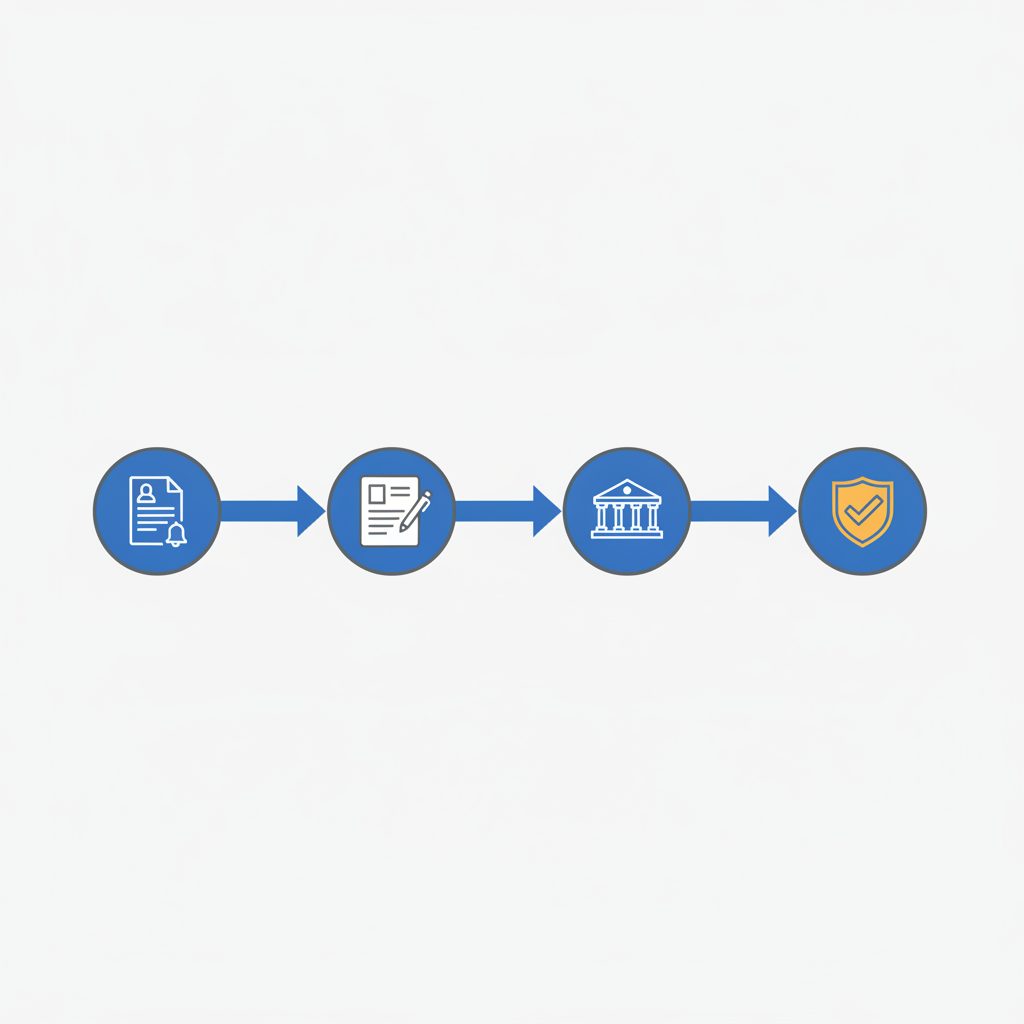














Recruiters do not read your resume. They scan it. In India, where a single opening on a job portal can pull 400 to 2,000 applications, the first person who looks at your CV spends six to eight seconds deciding whether to open it fully or move on. Getting a resume shortlisted in India is mostly about surviving those eight seconds and the software that runs before them.
That software matters more than people admit. Large employers, and most staffing firms, run applications through an Applicant Tracking System (ATS). Wipro, Infosys, TCS, HDFC Bank, and nearly every campus-hiring drive use one. The ATS parses your file into fields, matches keywords against the job description, and ranks you. A beautiful two-column PDF with icons and a photo can confuse the parser and drop you before a human ever sees your name.
What actually gets a resume shortlisted in India
Three things, in order: relevance, readability, and proof. Relevance means the skills and titles on the page match the job posting. Readability means a machine and a tired human can both extract what you did in seconds. Proof means numbers, not adjectives.
Start with format. Use a single-column layout. Save as PDF unless the portal specifically asks for a .doc file. Naeukri and many company portals still handle .docx more reliably for parsing, so read the upload instructions. Name the file properly: Priya_Menon_Resume.pdf, not resume_final_v3.pdf. Pick one clean font, keep it at 10 to 11 point, and give the page room to breathe.
Length is a real debate here. If you have under five years of experience, one page. If you are a senior engineer or manager with a decade behind you, two pages is fine. Freshers who stretch to two pages by padding “hobbies” and “declaration” lines are wasting the recruiter’s patience.
The summary line and the keyword problem
Drop the “Objective” section. Nobody in a hiring team cares that you seek “a challenging role in a reputed organisation to utilise my skills.” Replace it with a two-line professional summary that states what you are and your strongest evidence: “Java developer, 3 years, built payment-reconciliation services handling 2 lakh daily transactions at a fintech startup.” That single line carries a title, a duration, a domain, and a scale number.
Keywords decide the ATS match. Read the job description and mirror its exact vocabulary. If it says “React.js” write “React.js,” not just “front-end.” If it lists “GST filing” and “Tally,” those phrases belong in your skills section verbatim. Do not stuff them into invisible white text or repeat them thirty times; modern parsers flag that and recruiters delete it on sight. Use the real terms in real sentences.
Write bullets that prove, not describe
This is where most Indian resumes collapse. “Responsible for handling team” tells a recruiter nothing. Rewrite every bullet to answer: what did you do, and what changed because of it?
- Weak: Handled customer queries and complaints.
- Strong: Resolved 60+ customer tickets daily, cut average response time from 9 hours to under 3.
- Weak: Worked on the company website.
- Strong: Rebuilt the checkout page in React, which lifted mobile conversions by 18% over two quarters.
Not every job hands you clean metrics. A cashier, a teacher, a lab assistant still has numbers: students taught, samples processed, cash handled per shift, error rate. Dig for the real figure. Never invent one, because a sharp interviewer will ask you to walk through the math, and a fabricated 40% improvement falls apart in one follow-up question.
Education, projects, and the fresher’s dilemma
Freshers, put education near the top and lead with anything concrete: your final-year project, an internship, a hackathon, a GitHub repo, a Kaggle rank, an NCC or NSS role that shows responsibility. List your CGPA if it is 7.0 or above; below that, list it only if the employer demands it and skip it otherwise. Mention board percentages for 10th and 12th only if you are a fresher and they are strong.
Certifications carry weight in the Indian market when they are recognised: NPTEL, a genuine AWS or Google Cloud badge, a real Coursera specialisation you finished. Do not list a 90-minute YouTube tutorial as a “course.”
Order the sections so a recruiter reads top-down
Section order is a decision, not an accident. For an experienced candidate, the order runs: name and contact, a two-line summary, skills, work experience (most recent first), then education and certifications. For a fresher, education and projects jump above work experience, because that is your strongest material. Whatever your case, the top third of page one has to carry your best evidence, since that is the zone a recruiter reads before deciding to continue.
Keep the skills section scannable and grouped, not a wall of forty words. An IT candidate might split it into languages, frameworks, tools, and databases. A finance candidate might group accounting software, compliance areas, and analysis tools. Grouping helps both the human eye and the keyword parser find what they came for. And put the skills that match the specific job at the front of each group, because order signals priority.
The mistakes that get you rejected fast
Spelling errors are the fastest disqualifier. A single typo in a resume that claims “excellent attention to detail” ends the conversation. Get one careful friend to proofread, then read it aloud yourself.
Cut these outright: a photo (unless applying to aviation, hospitality, or a role that specifically asks), your full home address (city and state is enough), marital status, father’s name, and the “I hereby declare that the above information is true” line. None of it helps you and some of it invites bias. Keep your phone number and a professional email; coolguy_rocky@ does not belong on a CV.
Match the resume to each application. A single generic file sent to fifty postings performs worse than five tailored ones. Reorder your skills and rewrite your summary line to face the specific role. It takes ten minutes and it is the difference between the shortlist and the archive folder.
One last thing on interviews and honesty: the resume gets you into the room, and everything on it is fair game. If you list “advanced Excel,” expect a VLOOKUP question. Put down only what you can defend. Once your resume clears the shortlist, your interview preparation has to back up every claim on the page.