











To become a CA in India you complete the Chartered Accountancy course run by ICAI, moving through three exam levels, Foundation, Intermediate and Final, plus a practical articleship. This guide explains how to become a CA step by step, with eligibility, a realistic timeline, the exam pattern and career scope, so you can plan the journey honestly.
What is a Chartered Accountant and who awards the title?
A Chartered Accountant is a qualified finance professional trained in accounting, auditing, taxation, law and financial management. In India the qualification is awarded solely by the Institute of Chartered Accountants of India, or ICAI, a statutory body. Only ICAI can register students, conduct the exams and grant membership, so every genuine CA is an ICAI member. Beware of any private institute that claims to award a CA degree by itself; coaching centres prepare you, but only ICAI certifies you.
The CA path at a glance
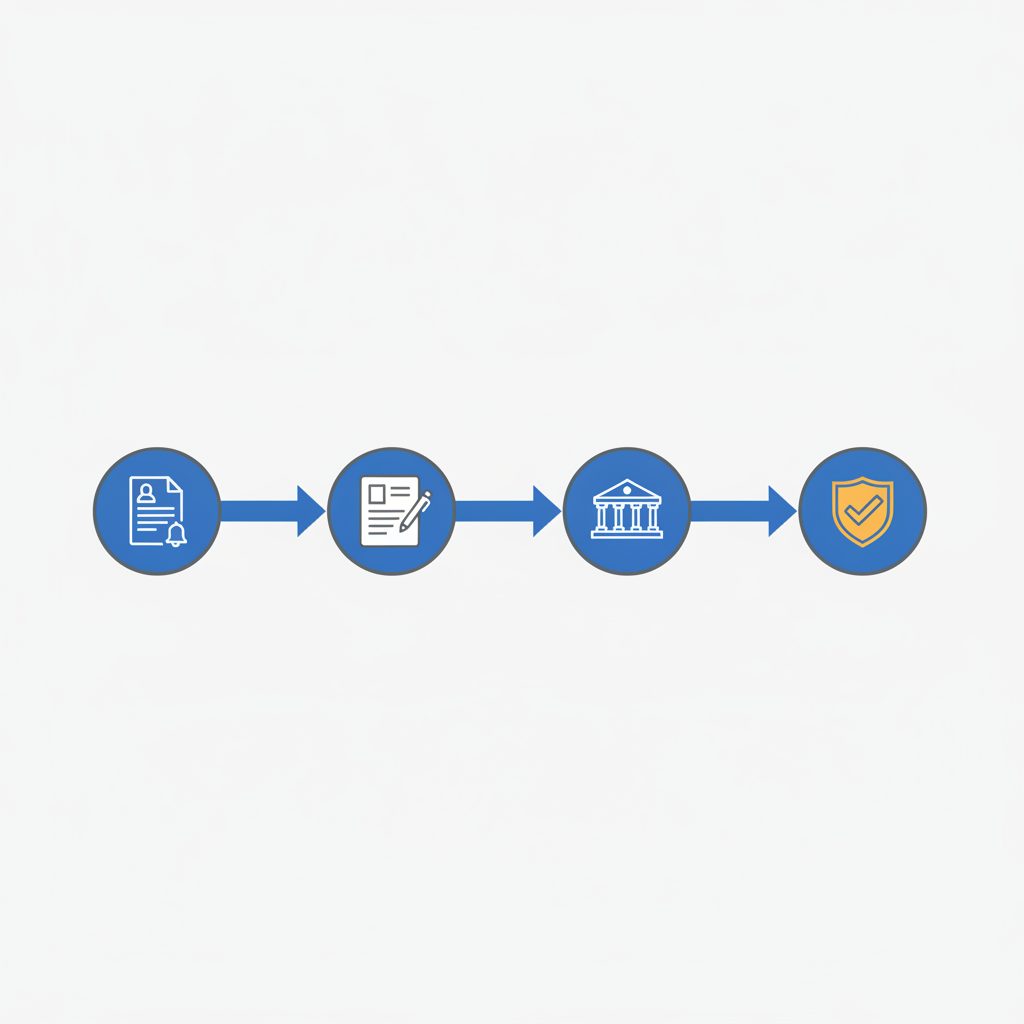
The ICAI course has a clear structure. The table summarises the main stages; the sections below explain each.
| Stage | What it is | Typical entry point |
|---|---|---|
| Foundation | Entry-level exam | After Class 12 |
| Intermediate | Two-group exam | After clearing Foundation, or direct entry for eligible graduates |
| Articleship | Practical training under a CA | After clearing required Intermediate group(s) |
| Final | Highest-level exam | Near the end of articleship |
| Membership | ICAI grants CA designation | After Final + training complete |
Step 1: CA Foundation
The Foundation is the entry gate for students joining after Class 12. You register with ICAI, complete a study period and then sit the exam. Foundation covers the basics of accounting, business laws, quantitative aptitude and business economics. Commerce students often find the ground familiar, but students from other streams can and do qualify. The aim at this stage is to build strong fundamentals, because everything above depends on them.
Step 2: CA Intermediate
After clearing Foundation, you move to Intermediate, which is more demanding and organised into two groups of papers covering advanced accounting, cost and management accounting, taxation, auditing, corporate law and financial management. Eligible graduates may enter Intermediate directly under the ICAI direct entry route, subject to the prescribed marks and conditions. You can attempt the groups together or separately. Clearing the required group or groups is what makes you eligible to begin practical training.
Intermediate is where many students first feel the real weight of the course, because the volume of study and the depth expected step up sharply from Foundation. This is normal. Treat it as the stage where you build the professional habits, planning, revision and answer practice, that will carry you through the Final. Clearing one group at a time is a legitimate and common strategy if attempting both at once feels overwhelming.
What happens during articleship?
Articleship is the heart of the CA journey and one of its most valuable parts. It is a period of supervised practical training, generally lasting around two to three years, served under a practising Chartered Accountant. During this time you work on real assignments, statutory audits, tax filings, accounting and compliance, while continuing to prepare for the Final. You usually receive a monthly stipend, though it is modest. Many students say articleship teaches them more about the profession than any textbook, and the firm you train with can shape your later career direction. ICAI also requires prescribed practical and IT or soft-skills training as part of the course.
Step 3: CA Final
The Final is the highest and hardest level, taken near the end of articleship. It tests advanced financial reporting, strategic financial management, advanced auditing, direct and indirect taxation and law at a professional depth. Clearing both groups of the Final, along with completing the required training, is the last academic hurdle. The pass percentages at this level are modest, so sustained, conceptual preparation matters far more than last-minute cramming.
Step 4: Becoming an ICAI member
Once you clear the Final and complete all prescribed practical training, you apply for ICAI membership. On approval you become an Associate Chartered Accountant and may use the CA designation. With further experience you can progress to Fellow membership. Only at this point are you formally a Chartered Accountant, entitled to sign off on the work the law reserves for CAs. Membership also brings continuing obligations, such as staying current with professional education and following ICAI standards, because the CA designation carries public trust that has to be maintained throughout your career, not just earned once.
How long does it realistically take?
On paper, the Foundation route can be completed in around four to five years if you clear every stage on the first attempt and your articleship runs to schedule. In practice, many students take longer because the exams are genuinely tough and repeat attempts are common. This is normal and not a failure; treat four to five years as a best-case timeline and plan for the possibility of extra attempts. The direct entry route can shorten the path slightly for eligible graduates by skipping Foundation.
What skills and habits help you clear CA?
- Conceptual clarity: The exams reward understanding over memorisation, so learn why, not just what.
- Consistency: Steady daily study over months beats intense cramming before exams.
- Practice under time pressure: Solve past papers and mock tests to build speed and presentation.
- Discipline during articleship: Balancing real work and study is hard; a routine keeps both on track.
- Resilience: Many toppers cleared some group on a later attempt. Persistence matters as much as intelligence.
How much does the CA course cost?
One of the strengths of the CA route is that it is relatively affordable compared with many professional courses. The ICAI registration and exam fees across the levels are modest, and during articleship you earn a stipend rather than paying heavy tuition. Most of the real cost comes from optional coaching, which many students take for the harder papers but which is not compulsory. Compared with an expensive private degree or a foreign qualification, CA offers a high-value path for students who are willing to self-study and persist. Always check the current fee structure on the official ICAI website, as amounts are revised from time to time.
How should you prepare for the CA exams?
Because the exams reward depth and consistency, your study method matters as much as your hours. A few principles that repeatedly help students:
- Follow the ICAI study material closely, since the exams are set around it, and use coaching only to supplement, not replace, it.
- Revise in cycles rather than reading once; multiple revisions embed concepts far better than a single long study.
- Practise writing full answers under time limits, because presentation and speed carry real marks.
- Keep up with amendments in tax and law, as these change and are examined.
- Protect your health and routine, especially during articleship, when balancing work and study is hardest.
What career scope does a CA have?
The CA qualification opens broad and respected career paths. Qualified CAs work in audit and assurance, direct and indirect taxation, corporate finance, financial reporting, risk and internal audit, and advisory. You can join a chartered accountancy firm, work in industry across finance roles, enter banking or consulting, or start your own practice. The designation is also a strong foundation for senior finance leadership over time. Because it is one of the higher-earning professional routes in India, CA also appears in our overview of the highest salary jobs in India, though pay always depends on employer, city and experience rather than the title alone.
CA versus other finance qualifications
Students often weigh CA against options like CS, CMA, an MBA in finance or the CFA. Each suits a different aim. Company Secretary focuses on corporate law and governance, while Cost and Management Accountant centres on costing and management accounting. An MBA opens broader management and corporate roles, and the CFA is oriented toward investment and portfolio work. CA remains the most versatile and widely recognised of the accounting qualifications in India, covering audit, tax, accounting and finance together, which is why it appears in our overview of the highest salary jobs in India. Some professionals combine qualifications over time, for example adding an MBA or CFA to a CA base, but there is no need to rush; depth in one respected qualification is a strong foundation on its own.
Is CA the right choice for you?
CA suits people who enjoy numbers, structure, law and problem-solving, and who can commit to several years of disciplined study alongside real work. It demands patience and resilience more than raw brilliance. If you are still exploring options, structured skilling routes such as the government apprenticeship and Skill India programmes can help you build workplace experience while you decide, and many finance-adjacent roles are now open through remote and hybrid work.
Conclusion
Becoming a CA means progressing through the ICAI stages, Foundation, Intermediate, a two-to-three-year articleship and the Final, before earning membership and the right to call yourself a Chartered Accountant. It is a demanding but respected path, typically taking four to five years at best and often longer. Approach it with conceptual clarity, consistency and resilience, verify every step against official ICAI rules, and treat any salary figures you hear as approximate ranges rather than promises.
Frequently Asked Questions
How many years does it take to become a CA?
Through the Foundation route after Class 12, it typically takes around four to five years if you clear each stage on the first attempt, including the practical articleship. Many students take longer because the exams are tough and multiple attempts are common. Treat four to five years as a best-case, not a promise.
Can I become a CA after 12th commerce?
Yes. After Class 12 you register for the CA Foundation, the entry level of the ICAI course. Commerce students often find the syllabus familiar, but students from science and arts streams can also qualify. Graduates may be eligible for a direct entry route into Intermediate, subject to ICAI rules.
Is CA very difficult to clear?
CA is widely regarded as one of the tougher professional courses in India, with modest pass percentages at the Intermediate and Final stages. Success usually needs consistent study over months, conceptual clarity and regular practice. It is achievable with discipline, but it is not a course to attempt casually or cram at the last minute.
What is articleship in the CA course?
Articleship is a period of supervised practical training, generally lasting around two to three years, completed under a practising Chartered Accountant. You work on real audits, tax and accounting assignments while continuing to study. It is a compulsory part of the ICAI path and often shapes your skills and career direction more than the exams alone.
What does a CA earn in India?
Earnings vary widely. Newly qualified CAs often start somewhere around 7 to 12 lakh per year, with campus offers and top firms going higher, while others start lower in smaller practices. Income grows significantly with experience, specialisation and reputation. Any figure is an approximate range that depends on employer, city and role, not a guarantee.

