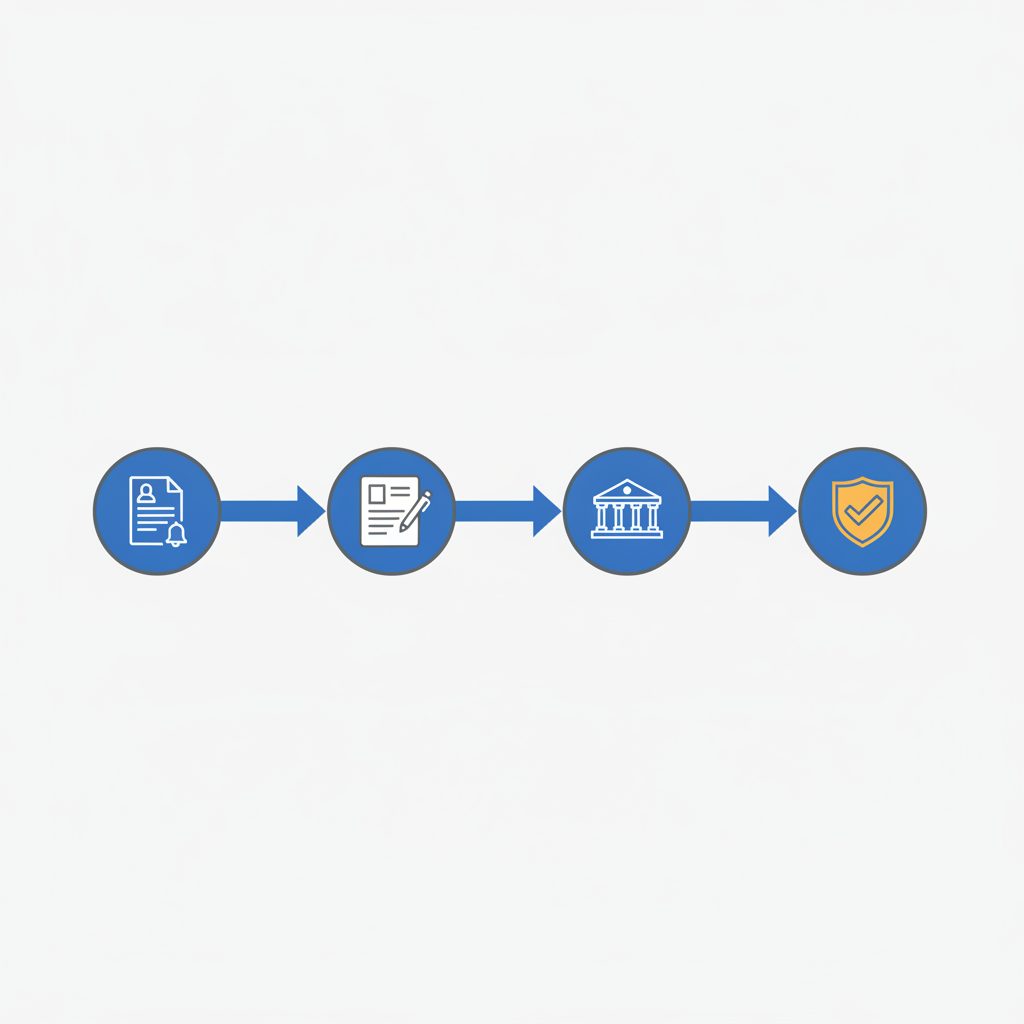













Job scams are one of the most common and damaging frauds in India, and job seekers — especially those hoping for a government position — are a favourite target. This page is a practical safety guide. Read it, and share it with anyone you know who is looking for work. GetJobsNews publishes this in the public interest; we are a news publication, not a recruiter, and nothing here is a fee-charging service.
The one rule that matters most
Never pay money for a government job. There is no legitimate government recruitment in India where you pay someone to secure, confirm, or speed up a job. Genuine recruitment happens through official written exams, interviews, and merit lists — not through payments, agents, or “confirmation” fees. If anyone asks you to pay to get a sarkari naukri, or promises a guaranteed government job in exchange for money, it is a scam. Full stop.
The only payments that can ever be legitimate are official application or examination fees, and those are paid only on the recruiting body’s official website or through the exact payment method its official notification specifies — never to a personal account, an agent, or a middleman.
Warning signs of a job scam
- Any request for a fee to get, confirm, or fast-track a job — registration fee, security deposit, training fee, laptop deposit, “refundable” charges, or a bribe.
- An offer letter from a free email address (Gmail, Yahoo, Outlook, etc.) claiming to be from a government department or a large company. Real organisations use their own official domains.
- Recruitment run over WhatsApp or Telegram — groups or individuals promising jobs, exam papers, or “direct joining.” Selling of question papers or guaranteed selections is fraud.
- A job offer you never applied for, or one that arrives with unusual urgency (“pay within 24 hours or lose the seat”).
- Requests for sensitive information — OTPs, bank passwords, full card numbers, or Aadhaar/PAN details sent to an unverified contact.
- Salaries or perks that are far too good for the role or qualifications described.
- Poor spelling, mismatched logos, or a website address that is slightly “off” from the real one.
- Pressure to keep it secret or to deal only through one particular “agent.”
How to verify an official source
Before you trust any recruitment notice, confirm it is genuinely official:
- Check the domain. Official Indian government websites almost always end in .gov.in or .nic.in. Be suspicious of lookalike domains that add extra words, hyphens, or use .com/.in to imitate an official body.
- Go to the source directly. Type the known official website address yourself, or reach it through the department’s verified homepage — do not rely on links forwarded in messages or ads.
- Match the notification. A real recruitment notice is published on the official site with a notification number and details. If a “job” exists only in a WhatsApp forward or a random website, treat it as fake until proven otherwise.
- Never pay through unofficial channels. If fees are genuine, they are collected on the official portal, not via UPI to a personal number.
What to do if you are targeted or scammed
If you encounter a job scam — or have already lost money — act quickly:
- Report cybercrime at cybercrime.gov.in, the Government of India’s National Cyber Crime Reporting Portal. This is the official place to report online financial fraud and job scams.
- Call the national cyber-crime and financial-fraud helpline: 1930. If you report a fraudulent transaction quickly, there is a better chance of stopping or recovering the money.
- Contact your bank immediately to freeze or dispute a transaction if you have paid.
- Preserve evidence — screenshots, messages, phone numbers, email addresses, payment references, and the offer letter — and provide them when you file your report.
- Do not send more money. Scammers often follow one payment with demands for another to “release” the first. Stop engaging.
How GetJobsNews fits in
We publish this guide because we cover jobs and see how much fraud surrounds them. To be clear about our own role: GetJobsNews does not recruit, does not post vacancies or results, and will never ask you for money in exchange for a job or an application. We cannot help you recover funds or intervene in a case — that is what the portal and helpline above are for — but we can help you recognise fraud before it costs you. If something feels wrong, trust that instinct and verify at the official source.
For how we approach coverage generally, see How We Cover Jobs. This page is general safety information in the public interest and is not legal advice.